Skip to content
Global Rights: Advocates For Sustainable Justice
All press statements

Meet our Sheroes – Hajia Asma’u Joda

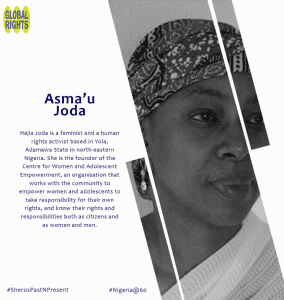
Sheroes portrait card for Asma’u Joda: a black-and-white photograph of her in a patterned headwrap, beside a short biography, tagged #SheroesPastNPresent and #Nigeria@60.

Hajia Asma’u Joda

Hajia Joda is a feminist and a human rights activist based in Yola, Adamawa State in north-eastern Nigeria. She is the founder of the Centre for Women and Adolescent Empowerment, an organization that works with the community to empower women and adolescents to take responsibility for their own rights, and know their rights and responsibilities both as citizens and as women and men. Her work has included stopping child marriages, securing divorce for women in abusive or unhappy marriages, and getting legal redress for girls who have been raped.

Hajia Joda also serves as a Board member of the Isa Wali Empowerment Initiative, a non-governmental and nonprofit organization established with the aim of transforming the lives of the most vulnerable groups (women and children), through the provision of access to improved healthcare, education, economic empowerment programmes channeled at boosting their confidence and self-esteem, and enhancing capacity building in order to motivate them towards a life of economic self-reliance and sufficiency.

More press statements

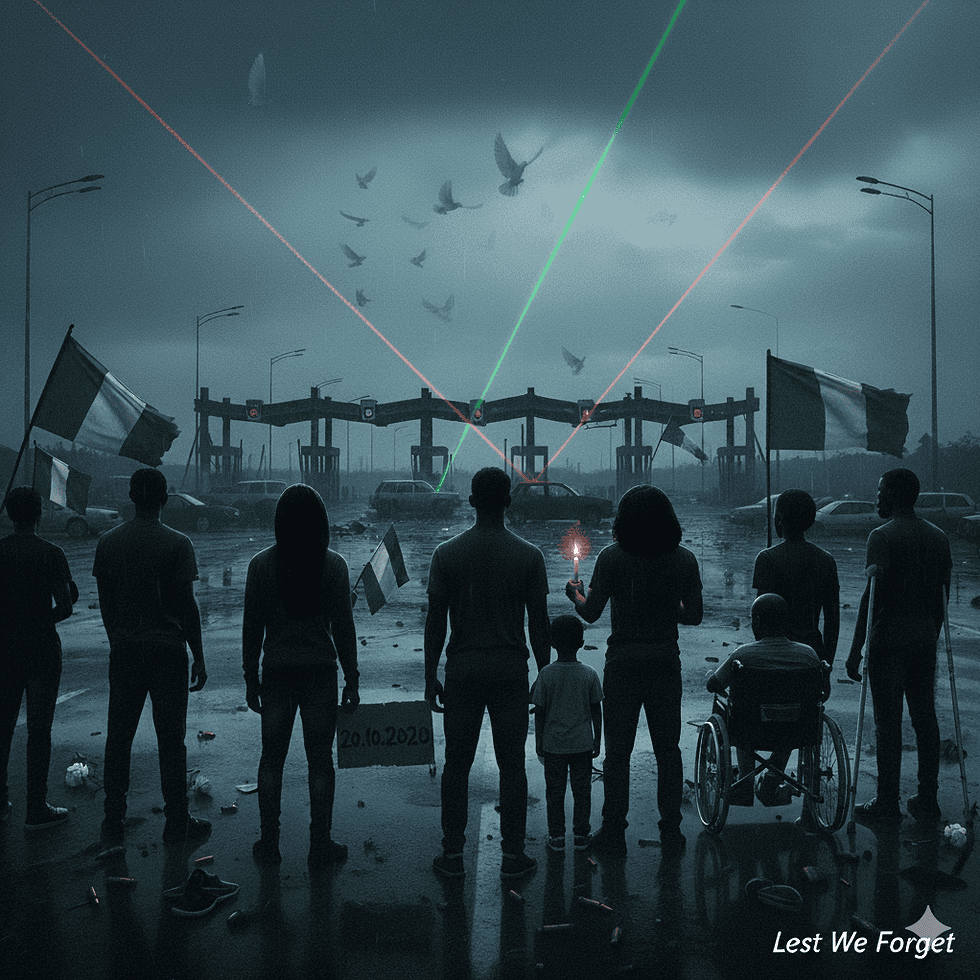
Illustration of a crowd standing in the rain facing the Lekki Toll Gate under a dark sky, holding Nigerian flags, a candle and a placard reading 20.10.2020, with doves overhead and the words “Lest We Forget”.

WAITING FOR ACCOUNTABILITY: 20.10.20 — FIVE YEARS ON

Five years later, accountability for this gross crime against Nigeria’s democracy remains elusive. No one has been held responsible for the killings. Instead, Nigeria’s civic space continues to shrink, and the same patterns of state overreach persist.

Read more
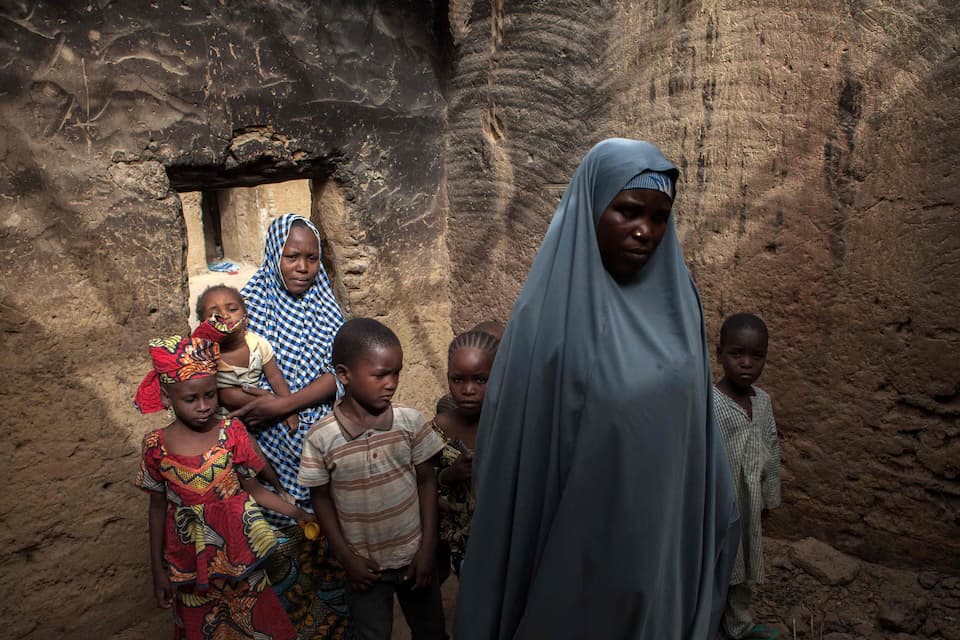
A woman in a pale blue hijab standing in a doorway of a stone building with six children gathered around her, one of them held in the arms of an older girl.

Eleven Years and Still Waiting to #BringBackOurGirls

Eleven years later, at least 91 of these 276 girls remain unaccounted for. Many were forcefully married to their captors, some died, and the insecurity that had marked Northeast Nigeria has metastasized and spread across the North-West and North-Central of the country.

Read more