We’re already deep into this conversation, and it’s getting more interesting.
In our first session, we unpacked the realities of mining governance and its implications for host communities. From understanding the foundations of host community rights to examining the gendered impacts of extractive activities, a clear pattern has emerged: while communities bear the social, economic, and environmental costs of mining, they often remain excluded from the systems that shape outcomes.
But that’s only part of the story, because these systems do not operate only at the national level.
Across Nigeria and the wider West African region, mining governance is significantly influenced by regional frameworks, particularly those developed under the Economic Community of West African States (ECOWAS). These frameworks establish standards on environmental protection, human rights, and community participation, and provide an additional layer of accountability that is often underutilized.
For many community actors, advocates, and even policymakers, these instruments remain inaccessible, either due to limited awareness or the technical nature of their provisions. And this gap matters because if you can’t access the instruments, you can’t fully utilize them.
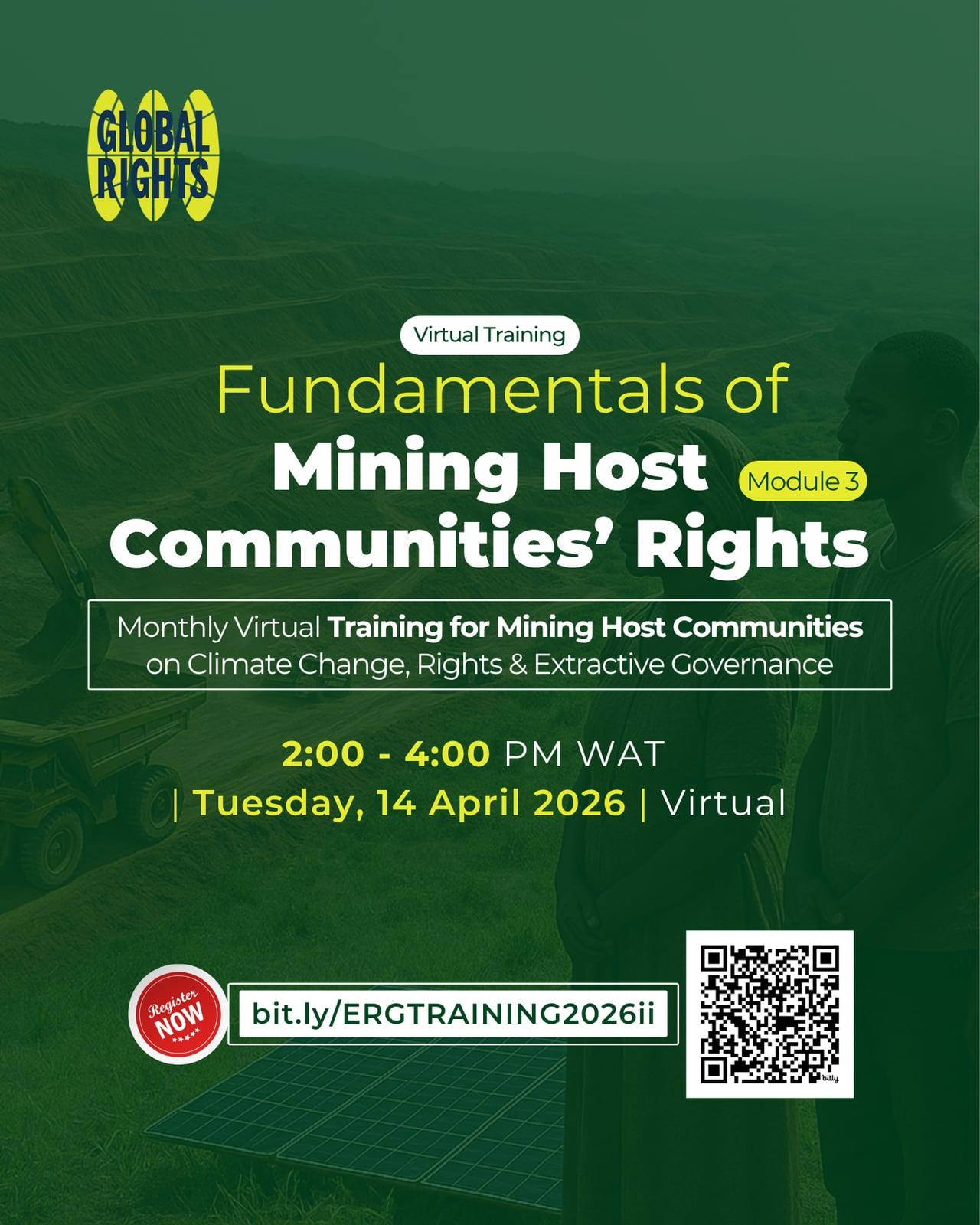
So in this session, we’re zooming in on that one missing piece. We’re breaking down ECOWAS protocols and regional safeguards in a simple, practical way, and we’ll show how they connect to community advocacy and action.
We’re connecting local realities to regional governance systems by showing how ECOWAS frameworks connect directly to community experiences and we’d love for you to be part of this next step in the series.
Each session in this series builds on the last and moves from understanding the issues to actively engaging in the systems around them.
If you’ve been following from the beginning, this is your next step. If you’re just joining, you’re right on time.